
CONTRACTOR BUSINESS DEVELOPMENT | BEYOND THE BID
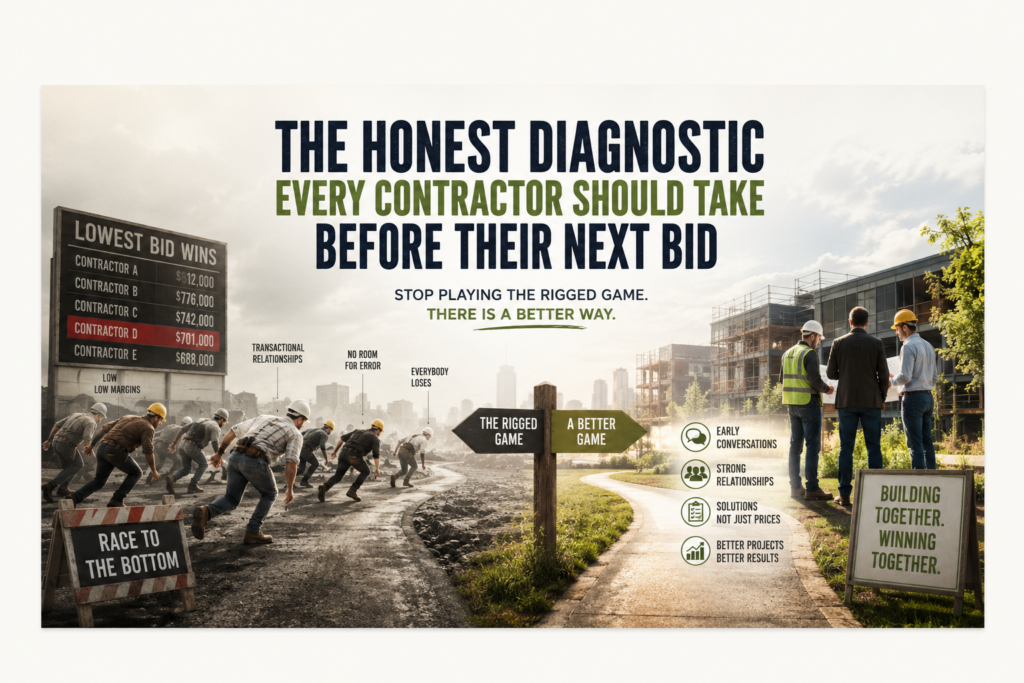
The Honest Diagnostic Every Contractor Should Take Before Their Next Bid
The construction industry is playing a game.
Has been for decades. And if you’ve spent any time in the trades, you’ve played it too.
It goes like this: a project gets defined, a scope gets written, bids go out, and contractors compete on price. The GC selects whoever will do it cheapest. The trades sharpen their pencils and hope the margin is worth what they accepted. The buyer assumes they got the best deal because they paid the least.
Everybody loses. Just slowly enough that nobody stops to notice.
The Buyer Doesn’t Actually Get the Best Contractor
They get the hungriest one. The one who bid lowest because they needed the work most — not because they were the most qualified, the most experienced, or the most aligned with what the project actually needed to accomplish.
The scope gets executed by whoever was willing to accept the least margin. And when something goes wrong — and something always goes wrong — the relationship doesn’t have the depth to navigate it.
The buyer saved money on the front end. They paid for it everywhere else.
The GC Doesn’t Get the Best Team
Competitive bidding gives the GC leverage on price. What it doesn’t give them is commitment, quality, or a trade partner who shows up with anything more than the minimum required to get paid.
The GCs who consistently deliver excellent projects aren’t running the hardest bidding process. They’re running the tightest partner network. They know who they can call. They know who shows up. And those contractors aren’t in the bid pool — they’re already on the team, long before the project goes out.
The Trades Take the Worst of It
Every project a race to the bottom. Every relationship transactional. Every dollar of margin fought for and then fought over.
And the painful part? The contractors running hardest in that race are often the best in the business. The quality is excellent. The work is done right. They just never learned that quality alone doesn’t get you off the bid list.
They’re winning bids and losing ground at the same time. And they’ve been doing it for so long it feels like the nature of the business.
It isn’t. It’s the nature of the game.
Why Everyone Keeps Playing
Here’s what makes the rigged game so hard to escape: it’s the only one anyone taught you to play.
Nobody in the trades sat you down and explained how to build a direct relationship with a facility director before a project goes out for bid. Nobody showed you how to show up during the buyer’s research phase, how to be present in the conversation where the problem gets defined, or how to have the relationship that puts you on the short list before the RFP exists.
Your marketing effort exists to be found when the buyer is ready to start shopping – but that’s too late.
The competitive bid process is so embedded in how construction works that most contractors have never seriously considered another model. Not because they lack the ambition. Because nobody showed them the alternative.
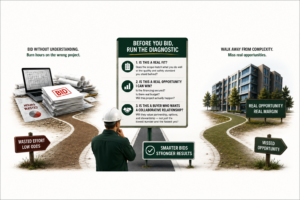
Before Your Next Bid — Five Questions
I put together a short diagnostic. Five questions. Five minutes. An honest look at which part of the rigged game your business is playing right now — and whether the rules are working for you or against you.
| Answer them the way your business actually operates. Not the way you’d like it to. |
→ CONTRACTOR DIAGNOSTIC — DOWNLOAD HERE: [LINK TO GOOGLE DOC]
There Is a Different Game
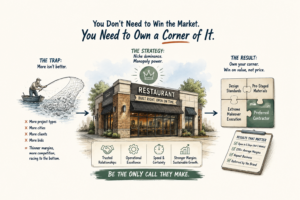
There’s a version of your practice where you’re not competing on price because you’re not competing at all.
Where facility owners call you before the project is scoped. Where your expertise reaches the buyer directly — not filtered through the lowest-bid selection process. Where your pipeline reflects the quality of your relationships, not the randomness of who sent an invitation this week.
That game exists. Contractors are playing it. The diagnostic will show you where you are relative to it.
If your results tell you you’re deep in the rigged game — and most honest answers will — let’s talk.
Book a strategy session: [BOOKING LINK]