
![An illustrative infographic, divided vertically, compares two business approaches: "THE OLD WAY: COMMODITY BID LIST" (left) and "THE NEW WAY: PARTNERSHIP LEVERAGE" (right). On the left side, under a banner title of "The Bid List Isn’t a Relationship. Here’s What Is," a line of construction workers, some appearing frustrated, are waiting with stacks of bid forms in a queue to a counter labeled "GENERAL CONTRACTOR" with "SUBMIT BID" and "LOW PRICE WINS" signs. A very large pile of generic bid forms is shown next to them. Accompanying text labels state: "Being on the bid list feels like progress", "Most of the time, you lose", "It's a commodity position", "Levers: price, schedule", and "Auditioning, not differentiating". On the right side, labeled "THE NEW WAY: PARTNERSHIP LEVERAGE," a group of diverse professionals are seated at a modern table, collaborating over a blueprint. They are shaking hands over a central handshake icon, which is labeled "TRUST." A thought bubble above them contains four icons: "EARLY CONVERSATIONS" (phone and calendar), "SOLVING PROBLEMS" (gears and question mark), "REFERRALS" (connected arrows), and "JOINT STRATEGY" (gears and team). Through a large window behind them, a multi-story building is actively under construction, with a large tower crane visible. Right-side text labels list the benefits: "Called before the bid goes out", "Deeper in fewer relationships", "Most trusted, not cheapest", "Attract work, don't chase", and "Make the bid irrelevant". In the bottom-right corner, a button reads "BOOK CALL" and next to it, "[BOOK YOUR 20-MINUTE CALL]](https://salezworks.com/wp-content/uploads/2026/04/Gemini_Generated_Image_euv2bheuv2bheuv2-1024x559.png)
Being on the bid list feels like progress.
You’re invited to the table. You get the plans. You submit your number. You wait.
And most of the time, you lose. Or you win on a margin that makes you wonder why you bothered.
Here’s the thing nobody in construction wants to say out loud:
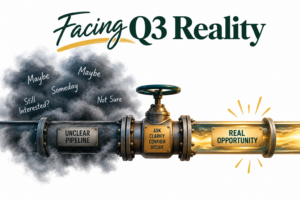
Being on the bid list isn’t a relationship. It’s a commodity position.
And the contractors who figured that out are playing an entirely different game.
The Bid Is the End of the Relationship Opportunity, Not the Beginning
By the time the bid documents hit your inbox, most of the decisions that matter have already been made.
The scope is set. The design is locked. The owner’s expectations are baked in. The GC has a shortlist in their head before the formal list ever goes out.
At that point, the only levers left are price, schedule, and whether you show up to the pre-bid walkthrough. You’re not differentiating. You’re auditioning.
The contractors who get called before the bid goes out — who get the “just between us” conversation about what’s coming down the pipeline — didn’t earn that call by being on more lists.
They earned it by being in the relationship long before there was anything to bid on.
What the Construction Industry Got Wrong About Relationships
The trades have a version of a problem that shows up in every industry:
Mistaking volume for value.
More GCs on the list. More pre-bid walks. More follow-up calls after the award goes to someone else.
The thinking is: if I stay visible to enough people, work will come. And sometimes it does. But it feels random — because it is.
The contractors who win the work they actually want — at margins they can live with, with owners and GCs they respect — aren’t on more lists.
They’re deeper in fewer relationships. And those relationships are doing work for them when they’re not in the room.
What a Real Partnership Looks Like in Construction
A real referral partnership in the trades isn’t transactional. It’s strategic.
It looks like knowing what your GC partner is chasing six months from now — and finding ways to help them get there, whether or not there’s a project in it for you right now.
It looks like solving a problem on the current job that has nothing to do with your scope. Flagging something they missed. Connecting them with someone they need to know.
It looks like showing up when there’s nothing to sell.
Every one of those moments is a deposit. And those deposits build the kind of emotional equity that gets you the phone call before the bid list exists.
Most contractors make an introduction, do a favor, solve a problem — and then move on without ever connecting that investment to the outcome it could produce. The equity sits unclaimed.
The ones who win consistently have figured out how to claim it.
Fewer Relationships. More Leverage.
Here’s what changes when you shift from collecting bids to cultivating partners:
You get called first. Not because you’re the cheapest — because you’re the most trusted. The GC already knows how you work, what you’ll flag, and that you’ll show up the same way every time.
Your partners sell you when you’re not in the room. They’re having conversations with owners and developers you haven’t met yet — and your name comes up because you’ve given them every reason to put it there.
You stop chasing work and start attracting it. The pipeline looks different when it’s driven by relationships instead of bid volume.
None of this is complicated. But it requires a shift most contractors never make — from thinking about the next bid to thinking about the next three years of a relationship.
Where to Start
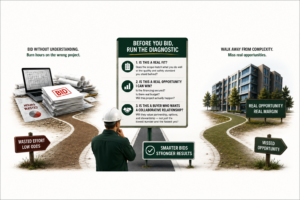
Look at your current relationships and ask one honest question:
Who in here has the access, the alignment, and the respect to be a genuine strategic partner — and how much have I invested in that relationship outside of project work?
If the honest answer is two or three people, start there.
Go deep. Find them work before you ask for any. Show up when the bid list is the furthest thing from anyone’s mind.
That’s how you stop competing on price.
Not by getting better at bidding.
By making the bid irrelevant.
If you’re ready to build the relationships that get you called before the bid goes out — let’s talk. Book a 20-minute call and let’s find out what that looks like for your business.