
The Bid List Is Not the Goal
Most contractors are playing the wrong game — and they don’t know it.
They’ve gotten comfortable throwing bids into the hopper, hoping the number lands. It’s low-friction. No real skin in the game. No hours invested before the RFP hits. Just a price and a prayer.
And then they wonder why margins are thin, owners treat them like vendors, and every job feels like a fight from kickoff to closeout.
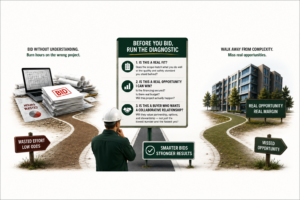
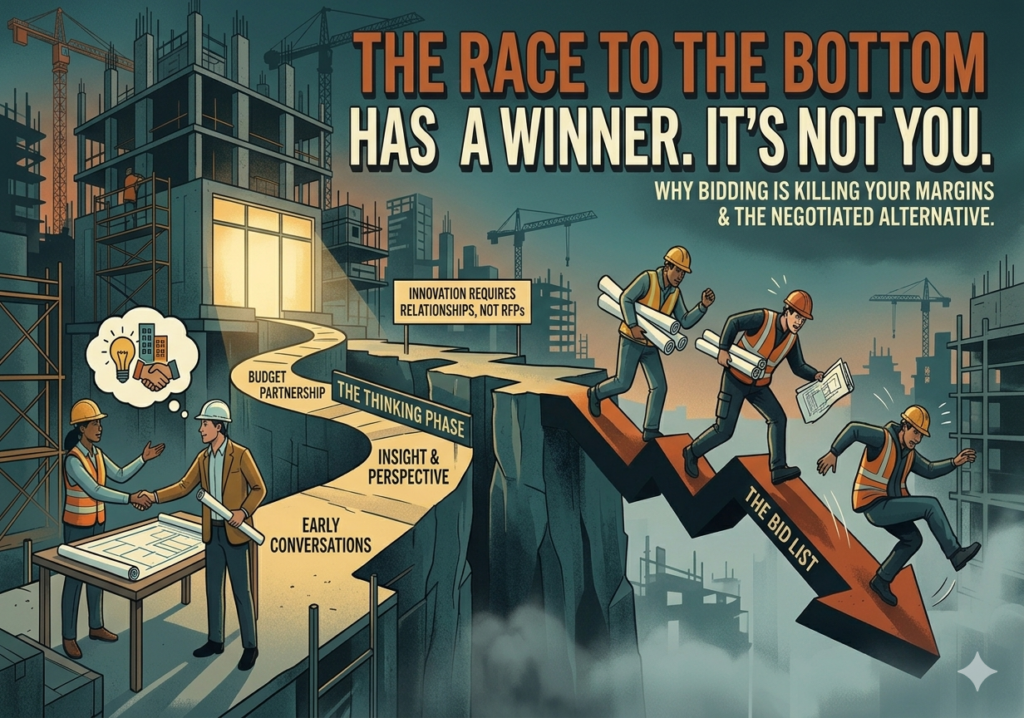
Here’s the thing about the bid list: being on it isn’t an achievement. It means someone decided you were interchangeable enough to invite alongside six of your biggest competitors. The owner isn’t choosing you — they’re choosing a number. And when price is the only variable that matters, the lowest one wins. Usually because they missed something. Sometimes because they’re willing to work for margins that don’t support doing the job right.
A race to the bottom benefits no one. Not the owner who ends up managing a contractor who’s hemorrhaging money. Not the trades who get squeezed at every turn. And not the contractor who won a job that was never really worth winning.
There’s a different way to work. And the contractors who’ve figured it out aren’t getting invited to bid.
They’re getting called before the architect starts drafting.
A contractor we work with stopped pitching and started bringing intelligence. Not proposals — perspective. Information that helped an owner understand something about their market they didn’t already know. It found its way to the people who make decisions. The call that came back didn’t say “you’re on the bid list.” It said: “We want you in on this before the architect starts drafting.”
That’s negotiated work. And it didn’t happen because of a flashy marketing campaign, a better website, or a stronger SEO strategy. It happened because of a conversation that was worth having.
Real negotiated work means you’re in the room when the project is still a concept. You’re helping an owner get a project funded — understanding what investors need to make a decision and showing up with that information. You’re identifying cost savings before they become cost overruns, shaping a design that comes in under budget without compromising the outcome. You’re bringing a total cost of ownership perspective that protects the owner from decisions that feel cheap today and cost a fortune tomorrow.
And you’re doing all of this in collaboration with your trade partners — not against them. The best projects get built by contractors who show up as partners to the owner and to each other.
None of this happens at the bid table. It happens in hours of conversation before a pencil ever hits paper.
That investment is exactly why most contractors won’t do it.
It’s easier to bid. It’s faster to quote. There’s no risk of a long conversation that goes nowhere. The problem is, easy and fast is the strategy that keeps you stuck in a commoditized market fighting over scraps with people who are willing to work for less than you can afford.
Demonstrating value isn’t a marketing problem. It’s a relationship problem. And it gets solved through conversations that provoke thought, options that improve the project in concept and design, and a genuine interest in whether the owner actually gets to grand opening — and whether it’s profitable when they do.
The contractors winning negotiated work made themselves indispensable in the thinking phase. Before there was anything to bid.
The question worth sitting with:
When an owner thinks about who helped them build something worth building — are you in that story?
If not, the bid table is where you’ll stay.
Next Thursday we’re hosting Built Different — a principals-only event for construction and trades leaders who are building something worth protecting. If you haven’t grabbed your spot, now’s the time. Message me at bfilbert@salezworks.com for details.
And if you’re ready to stop bidding and start influencing — Trust Lab opens April 2. Details HERE.